2026-08-27 ·
Does Homeowners Insurance Cover Water Damage in Iowa? A 2026 Claims Guide
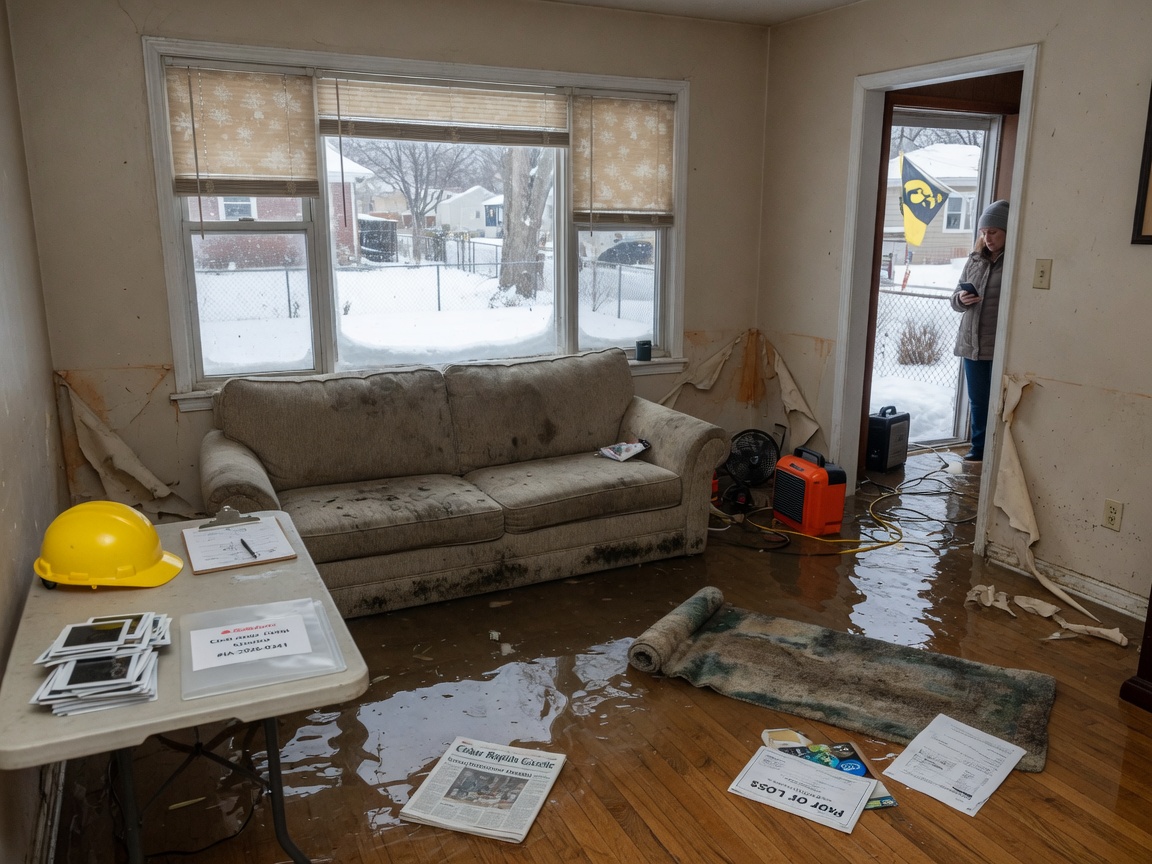
Homeowners insurance in Iowa typically covers sudden and accidental water damage from sources like burst pipes or appliance failures while excluding flooding, sewer backups, and gradual leaks. In Cedar Rapids, this distinction matters because cold winters often freeze pipes in older housing stock found in neighborhoods like Czech Village and NewBo District, leading to covered claims when the failure is abrupt. Policies also address interior damage from roof leaks during heavy summer rains but require proof that the cause was not long-term wear.
Sudden and Accidental Damage Coverage
Insurance carriers in Linn County recognize claims for events like a supply line rupture in a 40-year-old home in Northwest Cedar Rapids when water appears without warning. Adjusters look for signs of sudden failure rather than ongoing seepage that has damaged drywall over months. Burst pipe incidents in Downtown Cedar Rapids frequently qualify because winter temperatures drop below freezing and cause ice expansion inside lines. Homeowners should document the exact moment of discovery and retain any failed components for inspection. Policies usually reimburse drying, removal of damaged materials, and repairs up to policy limits when the event meets the sudden-and-accidental test. Burst pipe cleanup teams in Cedar Rapids routinely work with adjusters on these files to separate covered interior water from any excluded exterior flooding.
Flooding and Separate Insurance Needs
Standard homeowners policies exclude damage from the Cedar River overflowing its banks, a recurring risk for properties in Southeast Cedar Rapids and near Hawkeye Downs. Flood coverage requires a separate National Flood Insurance Program policy or private flood endorsement, which many Linn County residents add after major events. In 2026, claims tied to river levels will still hinge on whether water entered through doors and windows versus a pipe failure inside the structure. Homes in the NewBo District built before modern elevation standards often need both policy types to protect against summer thunderstorms that dump several inches in hours. Cedar River flood season 2026 preparation outlines steps owners can take before high water reaches Grant Wood or Kingston neighborhoods.
Sewer Backup and Endorsement Options
Many Iowa policies treat sewer backups as an exclusion unless the homeowner purchases a specific rider. In Marion and Iowa City commuting corridors, older clay tile lines serving 1950s–1970s homes in Oak Hill Jackson and Mound View can back up during heavy rain, pushing contaminated water into basements. Without the endorsement, cleanup costs fall to the owner. When the backup stems from a municipal main break rather than a clogged private line, some carriers extend limited coverage. Sewage backup cleanup crews serving Cedar Rapids document the source point to support or refute coverage arguments during the claims process.
Practical Steps After a Water Event
Document every room with dated photos before any removal begins, noting water depth in inches and affected square footage. Contact your agent within 24 hours and request a field adjuster visit, especially for claims originating in Wellington Heights or Noelridge Park where older foundations complicate moisture mapping. Keep receipts for temporary lodging if the home becomes uninhabitable. Basement flooding after an Iowa storm checklist provides a timeline that aligns with typical carrier response windows in Linn County. DR Water Restoration remains available 24/7 to perform initial extraction and drying while paperwork moves forward.
Local Climate and Housing Factors
Cedar Rapids experiences a humid continental climate with hot summers and cold winters that directly influence claim types. Frozen pipes account for many winter losses in Taylor and Kingston, while summer humidity slows drying in unconditioned crawl spaces common under 1920s–1940s homes in Czech Village. Soil conditions along the Cedar River floodplain retain moisture longer, raising the risk of repeat saturation in basements without proper grading. Adjusters familiar with these patterns ask specific questions about furnace humidifiers and ice dam locations that affect coverage decisions. Understanding these regional realities helps homeowners present claims that match policy language rather than generalized water damage descriptions.