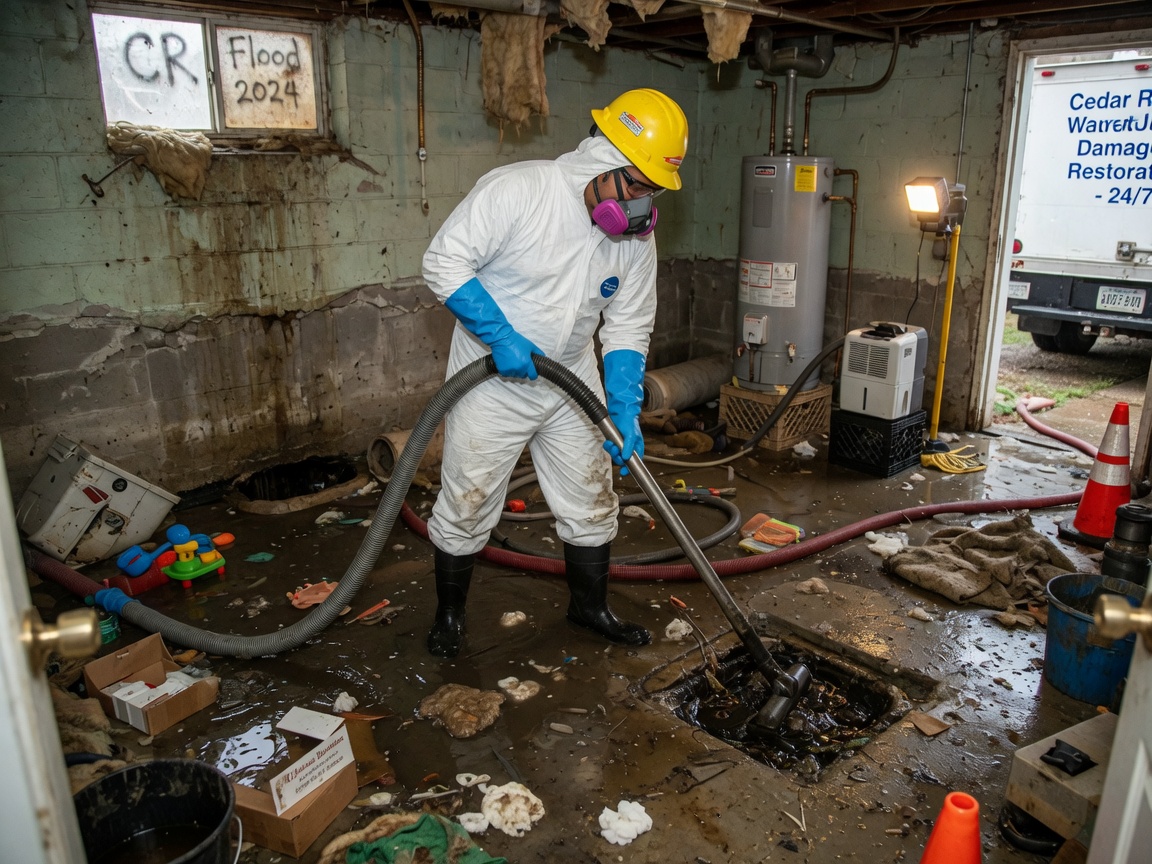
Sewage backups in Cedar Rapids often trace to older clay sewer lines common in Czech Village and Downtown homes, where roots and freeze-thaw cycles from the humid continental climate crack pipes during cold winters. When raw sewage enters basements, crews must first stop the source then extract standing water before it migrates into wall cavities or under slab foundations typical of mid-century stock in Northwest and Southeast Cedar Rapids. Failure to remove all contaminated material leaves behind pathogens that can aerosolize during later drying.
After extraction, every porous surface contacted by Category 3 water requires removal or aggressive antimicrobial treatment because the area's high summer humidity slows natural evaporation and encourages rapid bacterial growth. Technicians document moisture readings in joists and subfloors, then apply EPA-registered disinfectants followed by HEPA air scrubbing to meet Iowa Department of Public Health expectations for habitable space. In flood-prone zones near the Cedar River, repeated events can also compromise electrical systems and insulation that must be replaced rather than dried.
Homeowners in Marion and Iowa City sometimes attempt DIY cleanup with shop vacuums, but this spreads contamination and voids insurance coverage. Proper protocol includes hauling away saturated carpet, padding, and drywall to a licensed disposal site, then installing containment barriers to protect unaffected rooms during the multi-day drying phase that follows.
Technician insight
In Cedar Rapids, the thing that catches most people out with Sewage Backup Cleanup is older clay sewer lines in Czech Village and NewBo District homes that crack every winter when the ground freezes and shifts, sending backups straight into finished basements that homeowners then try to clean themselves with fans that just spread the contamination.
Southeast Cedar Rapids Basement Backup
A homeowner in Southeast Cedar Rapids discovered sewage rising through the floor drain after heavy spring rain overwhelmed an aging line. We extracted the water, removed saturated drywall and carpet, disinfected all surfaces, and ran drying equipment for four days until readings returned to normal. The family was able to return without lingering odors or health concerns.
Sewage Backup Cleanup Services We Offer
✓Basement Sewage Extraction
Rapid removal of standing contaminated water from Cedar Rapids basements using truck-mounted pumps sized for older foundation depths common in NewBo District homes.
✓Contaminated Drywall Removal
Cutting and disposal of affected wallboard up to 24 inches above water lines to eliminate hidden mold growth in humid Linn County conditions.
✓Sanitization and Disinfection
Application of hospital-grade antimicrobials to all contacted surfaces followed by clearance testing before reconstruction begins.
✓Structural Drying After Backup
Placement of commercial air movers and dehumidifiers calibrated for the cold-winter air infiltration typical in Czech Village properties.
✓Carpet and Pad Disposal
Safe removal and documented disposal of saturated flooring materials that cannot be salvaged after Category 3 water exposure.
Sewage Backup Cleanup Cost in Cedar Rapids, IA
| Service | Typical Range | What Affects It |
|---|---|---|
| Initial Assessment and Extraction | $350–$750 | Higher when multiple rooms or crawl spaces are involved |
| Sanitization and Drying | $800–$2,200 | Depends on duration needed in humid summer conditions |
| Material Removal and Disposal | $400–$1,100 | Varies with amount of drywall, carpet, and insulation replaced |
Ranges are typical for Cedar Rapids, IA and confirmed with an exact written quote before any work starts.
How it works
- 1
On-Site Assessment
Technicians arrive within hours, map the extent of contamination, and identify the sewer line failure point while protecting unaffected areas.
- 2
Water Extraction
Standing sewage is pumped out and solids are removed to prevent further migration into subfloors or wall cavities.
- 3
Cleaning and Disinfection
All hard surfaces receive antimicrobial treatment and porous materials are removed per IICRC S500 guidelines.
- 4
Drying and Monitoring
Equipment runs until moisture meters confirm safe levels, with daily readings logged for insurance documentation.
- 5
Final Clearance
Post-remediation verification ensures the space meets habitability standards before reconstruction.
Pricing
Pricing varies by water volume, affected square footage, and whether structural materials must be removed.